Thea Lafond awarded $10,000 from National Bank of Dominica
2024-09-05 09:28:25
Prime Minister Dr Roosevelt Skerrit defends the minimum wage increase, assuring it boosts vulnerable workers without sparking inflation.
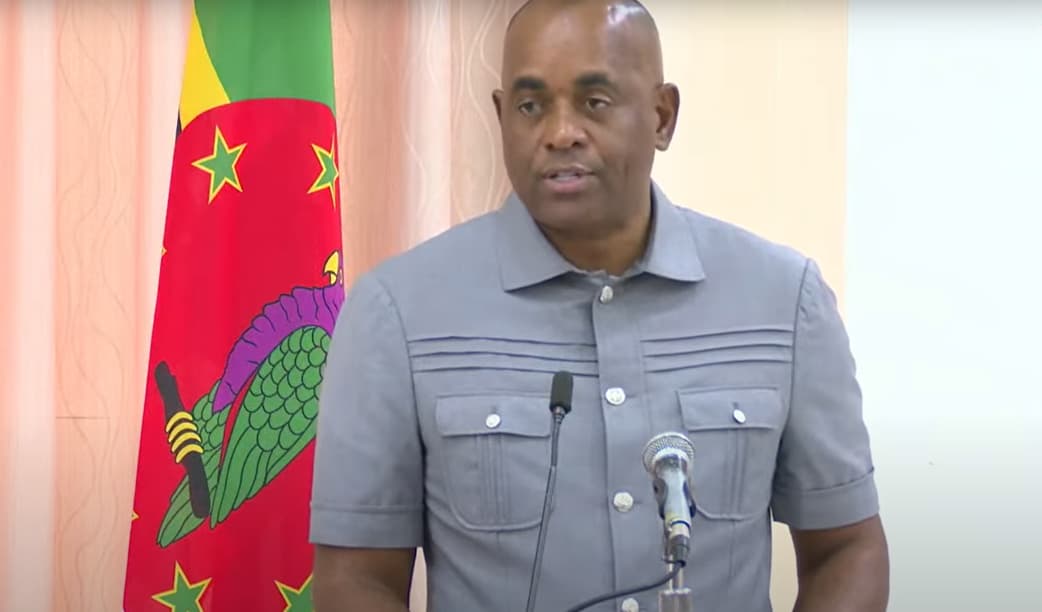
PM Dr Roosevelt Skerrit
Roseau, Dominica: Prime Minister Dr Roosevelt Skerrit addressed the concerns about a potential surge in inflation following the implementation of minimum wage adjustment in a year-end press conference on Monday. He clarified that there is no basis for any significant rise in the price of goods or any increase at all.
He emphasised that the fair minimum wage lifts vulnerable workers without burdening consumers. With this, the economy becomes more stable, not more expensive.
“The government wishes to assure the public that the adjustment to the minimum wage is being facilitated in a responsible, measured and economically sound manner, designed to protect workers incomes without triggering an unnecessary rise in prices,” PM Skerrit said.
By calling it a misconception, PM Skerrit stressed that increasing the minimum wage does not automatically lead to higher inflation. He said that the criteria of implementing the step is significant and the government has adopted a strategy that cushions the economy, supports business during the transition and safeguards the purchasing power of all the citizens in Dominica.
“There has been talk about the minimum wage will cause significant retail inflation and I want to share with you some perspectives on this. In retail stores across the Caribbean economies, supermarkets, clothing shops, hardware outlets, wages typically account for only 10 to 15% of the final price of goods.”
Giving a practical example of a grocery bill of EC$200, PM Skerrit outlined that the landed cost of the items, duties, taxes, overheads, that is rent and utilities and profit make up 85% or $170. On this bill, labour makes up 15% or $30 and a 30% increase in the minimum wages means that the $30 labour share would increase by $9 or to $39.
Accordingly, contrary to alarms raised that the 30% increase in the minimum wage will trigger a 30% or a 60% increase on a $200 grocery bill, the actual increase will be $9 or 4.5%.
PM Roosevelt Skerrit clarified, “Clearly, because labor is a small component of retail prices, there's really no basis for any significant rise in the price of goods, or indeed any increase at all.” He said that the retail prices move mainly because of international freight costs, global commodity prices, exchange rate shifts and import duties.
He clearly stated that a higher minimum wage does not affect these cost drivers. Retailers can cushion wage increases through progressive improvements in the efficiency and profitability of supply chain considerations or operations, increased productivity, better inventory management and waste reduction.
While giving references of other regional countries, PM Skerrit noted, “Caribbean countries that increased minimum wages in the past decade, for example in Barbados, Jamaica, Antigua and Barbuda, Saint Lucia, saw no significant retail inflation linked to wage hikes.”
PM Skerrit talked about the different measures adopted by the government of Dominica to ensure a smooth and stable implementation. He said that the price movements remained tied to global factors not local labour costs, so following factors were adopted for the step:
PM Skerrit explained that there will be proper productivity support for employers and workers, investment in skills training, digitisation and process improvements to help businesses generate higher output for employment.
He said that the higher productivity offsets wage costs and keeps prices stable.
In the second measure, proper operating costs, temporary relief measures such as reduced duties on essential inputs, faster customs processing, streamlined government services, reduced administrative burdens and support for energy efficiency will help small and medium enterprises absorb the adjustment without increasing prices to consumers.
PM Skerrit announced that the Labour-intensive and small enterprises will receive targeted assistance to ensure the wage increase does not place them at risk or lead to unintended inflationary pressures.
On the fourth step, the government is closely monitoring the market to prevent unfair price increases. Strong competition and regulatory oversight ensure that any cost adjustments remain fair, transparent and justified.
He said that the government remains confident that these policies will enhance the livelihoods of low-income workers, support sustainable growth and prevent inflation.
“We all will agree that after some time, that the wages that are controlled by an act of parliament, that those persons are allowed to be given an increase like everyone else, both in the private and public sector, who are governed or represented by unions, have received increases over the years to assist in dealing with inflation in the country,” PM Skerrit noted.
PM Skerrit also talked about the issues raised by the private sector since the implementation of the minimum wage on December 1, 2025. He said that the government established the minimum wage advisory board precisely to ensure that all sectors had an opportunity to contribute to the process.
He clarified that the board's mandate required it to balance private sector concerns with the overriding objective of ensuring a fair and livable wage for workers, particularly those at the lowest end of the income scale in our country.