American Airlines, JetBlue diverted from Cheddi Jagan Airport amid severe thunderstorm
2024-06-11 10:07:06
Prime Minister Gaston Browne said Antigua and Barbuda has addressed all US security concerns surrounding its Citizenship by Investment Programme and is seeking a review of the visa restrictions imposed on its citizens.
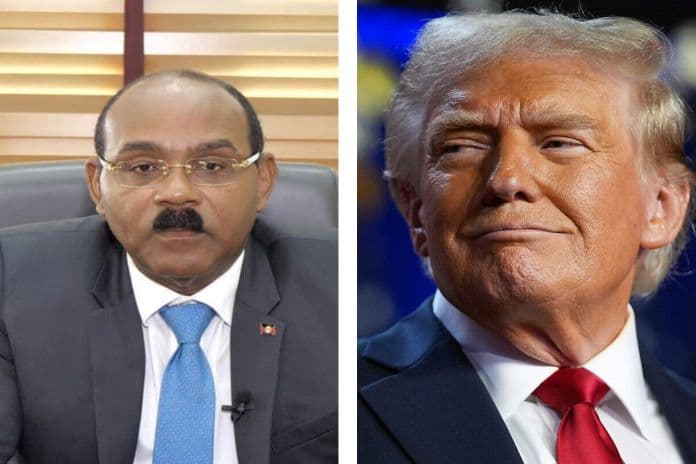
PM Browne Asks Trump Administration to Review Visa Restrictions on Antigua and Barbuda
St. John’s, Antigua: Antigua and Barbuda’s leader is reaching out directly to US President Donald Trump to lift strict visa restrictions on his citizens, arguing that his government has fixed every security flaw the White House complained about.
Prime Minister Gaston Browne sent a formal letter to Washington, urging the Trump administration to rethink travel limits imposed on the dual-island Caribbean nation. The dispute centres on Antigua’s Citizenship by Investment (CIP) initiative, a program that allows foreign investors to obtain passport rights through financial contributions.
The United States tightened visa rules for several Caribbean nations after raising sharp security concerns about “golden passport” programs. US officials argued that selling citizenship without requiring physical residency created dangerous loopholes.
Under the old rules, wealth seeking foreign nationals could acquire an Antigua and Barbuda passport without ever setting foot on the island. Washington feared this allowed high risk individuals to bypass standard border screenings and gain easier access to US travel privileges. To pressure local officials, the US government restricted tourist and student visas and implemented a high stakes “Visa Bond Program” requiring strict financial guarantees and deeper background vetting.
In his appeal, Prime Minister Browne insisted that Washington is acting on outdated information and ignoring aggressive overhauls made by his administration.
Browne highlighted several key reforms designed to lock down the program:
Mandatory Physical Stay: Antigua passed strict legislation requiring all new investment citizens to live on the island for at least 30 days before receiving full status.
Biometric Data Sharing: The country now shares fingerprints, facial data, and background checks directly with the US Department of Homeland Security.
Minimal Visa Risk: Browne noted that Antiguans have a low visa overstay rate of roughly 1% in the US, with zero citizens applying for political asylum.
Browne stressed that Antigua and Barbuda wants to preserve its long-standing alliance with Washington. The small island nation regularly collaborates with American law enforcement to intercept drug traffickers and secure regional trade routes.
“The government’s objective is not confrontation,” Browne said, emphasising that his country fulfilled every security request made by the US State Department. He added that given the new safeguards, “the time is now right for a review.”
Along with Browne’s direct letter, Antigua’s diplomatic mission in Washington delivered a formal diplomatic note to US Secretary of State Marco Rubio. The diplomatic push asks the State Department to evaluate the new security measures and lift the restrictions promptly.
As economic pressure mounts on Caribbean nations relying on investment revenue, Antigua now waits to see if the White House will accept the new rules and restore smooth travel between the two nations.