Jamaica shines as 3 women advances to 100m hurdles semifinals at Paris Olympics 2024
2024-08-07 16:15:29
Parliament approved a resolution setting 12 principles for negotiations with Washington, requiring case-by-case approvals, security checks and full funding commitments before any migrant transfers can proceed.
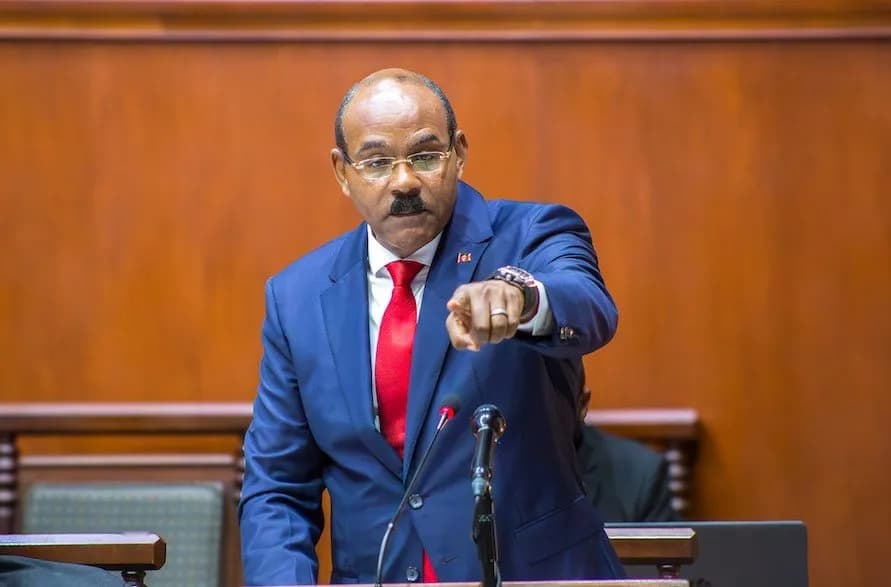
St. John’s, Antigua: Prime Minister Gaston Browne has proposed that the United States provide approximately US$75,000 over $200,000 for every third country national Antigua and Barbuda agrees to take in under a proposed migrant transfer arrangement.
Speaking in Parliament during a debate on his government’s white paper on the issue, Prime Minister Browne stressed that the $75,000 figure is tentative. He emphasised that the final price tag will depend on further talks and a thorough breakdown of what it costs to house, feed and care for each person.
The debate ended with Parliament passing a resolution outlining 12 strict principles to guide future negotiations with Washington. The measure ensures that Antigua and Barbuda retains full control over any potential transfers and makes clear that no final agreement has been signed yet.
Explaining the financial request, Prime Minister Gaston Browne pointed out that Antigua and Barbuda has a significantly higher cost of living than other nations asked to enter similar arrangements with the U.S. because public resources in a small island nation are tightly stretched, the government intends to qualify all expected costs, including healthcare, security, administration, housing and eventual return or onward travel before submitting a formal financial demand to U.S. officials.
Browne made it clear that national security and sovereignty will not be compromised for money or diplomatic favors. He warned that any individual considered a security risk will be rejected outright, regardless of potential fallout from Washington.
“If we were faced with an option of not taking criminals and to have visa restrictions, we will go for the visa restrictions, because accepting criminals will destroy our country,” Prime Minister Browne told lawmakers.
Under the newly approved parliamentary framework, the government rejected any open ended or automatic deal that would allow the U.S. to send predetermined numbers of migrants. Instead, transfers will be evaluated on a strict case by case basis, subject to prior background checks, written funding commitments, and the island’s capacity to absorb new arrivals.
Prime Minister Browne defended his decision to bring the sensitive talks before Parliament, contrasting his approach with other regional governments.
“By bringing the full proposal from the United States, and our response, before the House of Representatives, Antigua and Barbuda is demonstrating transparency and accountability, while maintaining our longstanding friendship and cooperation with the Government and people of the United States,” Browne said.
Attorney General Sir Steadroy Benjamin reinforced the Prime Minister’s stance, reassuring Parliament that the White Paper serves as a negotiating baseline rather than a binding contract.
“The White Paper is not presented as a complete agreement, nor is this House being asked to approve a conclusive operating agreement. None exists,” Benjamin explained.
While discussions continue, the government reiterated that it retains the complete right to pause, adjust or completely end negotiations if the final terms do not serve Antigua and Barbuda’s national interest.