Nevis: ‘Historic Charlestown’ on display at Social Service Building
2024-07-24 06:32:50
The framework requires applicants to establish a genuine connection through residency, economic contribution and social participation.
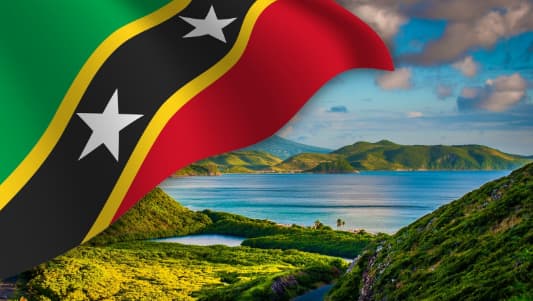
St. Kitts and Nevis introduces a redesigned Citizenship Programme grounded in a mandatory genuine-link requirement.
St. Kitts and Nevis: The Government of St. Kitts and Nevis has announced a redesign of its Citizenship Programme, introducing a mandatory genuine-link requirement. Under the new requirement, citizenship will be granted based on a demonstrable, substantive and real connection to the Federation.
The framework will require applicants to establish a genuine link with the country through clearly defined legal and policy criteria. This includes structured physical presence and residency, meaningful economic activity such as business establishment and job creation, and showing active involvement in the local economy or society.
Speaking during the roundtable, Prime Minister Dr Terrance Drew said that they are taking the measures to strengthen the security of the Citizenship Programme. The first measure will see the implementation of a residency framework and the second provides for the collection of biometric data from potential citizens around the world.
“We are serious when we say that we will make sure that we do what we have to do to put this CBI Programme in good standing,” said Dr. Drew.
PM Terrance Drew added that they have taken strict measures, aiming to enhance due diligence and make the process transparent.
Further, Calvin St Juste also talked about the measures and noted that the programmes remain a tool for the development of St. Kitts and Nevis.
“Our security is inseparable from the security of our international partners, while the Citizenship Programme remains a carefully governed tool for development finance that supports economic diversification in areas such as technology, healthcare, housing, and water security for the people of our Federation,” said Calvin St. Juste.
In an official communication, the CIU said that these steps will further help enhance integrity, strengthen robust due diligence, and meet international naturalisation standards. The Programme will also include an Innovation Pathway for individuals who establish an active, long-term partnership with St. Kitts and Nevis.
This includes innovation-driven business, research, technology, skills transfer, or technology projects that contribute towards economic diversification.
The Citizenship Programme will also transition away from contribution-based pathways. In place of passive financial contributions, the Programme will focus on residency and participation-based routes that encourage ‘meaningful engagement and long-term connection with the country’.
All CBI applicants will now be required to demonstrate physical presence and residency or actively participate in the economy and society of the Federation. In practical terms, this requires real involvement rather than passive contributions. The approach aligns with standards applied in leading permanent residency frameworks in the European Union, the United Kingdom, and the United States.
The CIU confirmed that all passports of St. Kitts and Nevis are issued exclusively by the Federation and delivered solely through official government channels, including embassies and consulates. This step forms part of the Government’s forward-looking redesign of the Programme.
It added that no passports are issued, delivered, or distributed through intermediaries or third-party entities -ensuring full state control, traceability, and security at every stage of issuance.
The redesigned Citizenship Programme will enhance governance, security, and due diligence measures. Steps such as multi-layered due diligence, continuous monitoring, and enhanced vetting standards will be implemented to align with international AML/CFT frameworks, stronger institutional oversight and accountability.
The reforms also address concerns related to security, transparency, and the misuse of visa-free access, the CIU said.
These measures position St. Kitts and Nevis as a global benchmark for responsible, compliant, and future-oriented citizenship policy. The redesign also aligns with the country’s agenda of becoming a sustainable island state, reflecting evolving international expectations applicable to visa-exempt third countries.
Further technical guidance and implementation timelines will be issued by the Citizenship by Investment Unit shortly.
Under the Public Benefit Option of the Citizenship Programme, St Kitts and Nevis broke ground for the Creative Arts Centre. Chairman Calvin St Juste at the groundbreaking noted that under the Public Benefit framework, every approved project must demonstrate a clear public impact. These are not merely projects with potential, they must deliver tangible outcomes.
He said, “Prime Creative Art Center embodies these principles. It promises to be an engine of growth, innovation and youth engagement. It is also an example of how St Kitts and Nevis recognizes talent as capital and creativity as a national asset.”
This development will do more than house performances or exhibitions. It's a platform for education, for skill development, for entrepreneurship, and for cultural expansion and expression.
The chairman added that the centre will nurture local talent, attract regional collaboration, and create opportunities that extend well beyond the walls of the building itself. He said that the groundbreaking is symbolic, its signal confidence in a highly regulating industry.
“It is an investment in your personal and potential, your voice and your voices and your future to partners and investors.”
PM Terrance Drew also said that the centre will create a space where talent can grow, where ideas can be developed and where creativity can be treated not just as a passion but as a profession.