Caribbean Airlines to offer 10% discount for all passengers on Duty-free store shopping
2024-05-09 09:28:28
President Sylvanie Burton has called for greater international financing for climate resilience before disasters, urging a shift from post-disaster reconstruction towards prevention, adaptation and sustainable development.
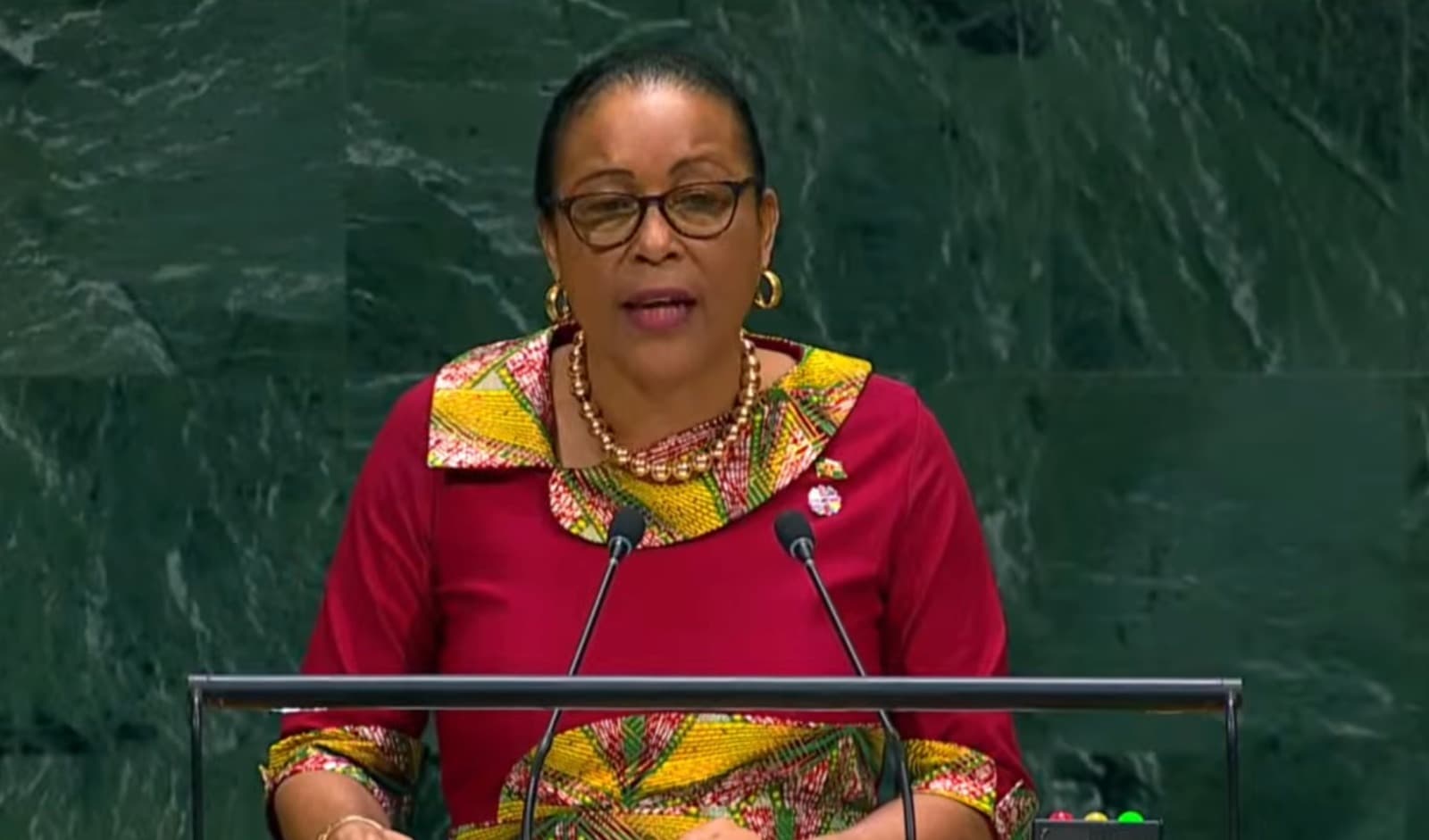
Sylvanie Burton UNGA 2026
Roseau, Dominica: President Sylvanie Burton of Dominica called for actions against climate change with global partnership, urging the international community to finance resilience before disasters strike. Speaking at the 81st session of the UNGA, the President said that Dominica has clearly showcased to the world what resilience looks like and how they can achieve it.
President Burton said Dominica’s experience with Hurricane Maria in 2017 had demonstrated the vulnerability of small island states, but also reinforced the need to build resilience ahead of future disasters rather than relying primarily on reconstruction afterwards.
“Resilience must begin before disasters,” she said, calling for greater international investment in resilient infrastructure, including roads and bridges, buildings, communications, water systems and health facilities.
President Burton also highlighted Dominica’s progress in renewable energy, pointing to the commercial operation of the country’s geothermal power plant. Renewable energy now accounts for approximately 84% of Dominica’s electricity generation, with the country working towards its goal of achieving 100% renewable energy by 2030.
She presented the energy transition as more than an environmental initiative, describing it as a foundation for economic transformation. According to the President, affordable and reliable renewable energy could support new industries, attract investment, create employment and strengthen the competitiveness of the small island economy.
“Every barrel of oil that we no longer need to import strengthens our resilience to international price shocks,” she said, while also calling for international financing mechanisms that can help vulnerable countries accelerate their transition to clean energy.
A central part of the President’s address was a call for changes to the way climate-vulnerable countries access international finance.
She argued that the existing approach often sees countries borrow to rebuild infrastructure after disasters, increasing their debt while replacing assets that could have been made more resilient in the first place. Instead, she called for greater access to concessional financing and adaptation grants, stronger disaster clauses in sovereign debt instruments and financing mechanisms that can be activated rapidly when disasters occur.
The President said Dominica did not want to be viewed simply through the lens of vulnerability.
“Dominica does not come to the United Nations asking to be treated as a victim of vulnerability. We come asking to be recognised as a partner in transformation,” she said.
She subsequently invited international partners to work with Dominica to establish the island as a “living laboratory for climate resilience and sustainable development.” The proposed areas of cooperation include resilient housing, renewable and smart energy systems, climate-smart agriculture, modern water management, digital public services, nature-based adaptation and new industries powered by clean energy.
The President also placed young people at the centre of Dominica’s transformation agenda, saying that resilience should ultimately translate into opportunities for the next generation. Investments in energy, connectivity, digital transformation, tourism, agriculture and resilience, she said, should converge around the objective of creating opportunities for young people to build businesses, work in emerging industries and participate in the global economy.
Beyond climate and development, the address also touched on international peace, sovereignty and multilateralism. The President reaffirmed Dominica’s support for the principles of the UN Charter, peaceful settlement of disputes and consistent application of international law, while stressing that small states should not become collateral damage in competition between larger powers.
She further called for renewed efforts to achieve the Sustainable Development Goals, acknowledging that conflict, climate change, debt, inflation and inequality have made progress more difficult for developing countries.
For Dominica, she said, the SDGs have been incorporated into its National Resilience Development Strategy 2030, Climate Resilience and Recovery Plan and wider development agenda, with efforts spanning housing, geothermal energy, education, technical training, agriculture, tourism and environmental protection.
The President ultimately called for a stronger form of international cooperation in which commitments translate into tangible results for vulnerable communities. For Dominica, restoring trust means ensuring that international commitments on climate resilience and sustainable development are matched by financing and action on the ground.
Her address positioned Dominica's climate agenda not only as a response to environmental vulnerability, but as a broader strategy for economic transformation, investment, innovation and long-term resilience.