British national fined $1.2M for cocaine possession in Saint James
2024-07-23 10:07:31
The Queen Elizabeth Hospital in Barbados successfully performed its first Transcatheter Aortic Valve Implantation (TAVI), marking a significant advancement in the country’s public healthcare.
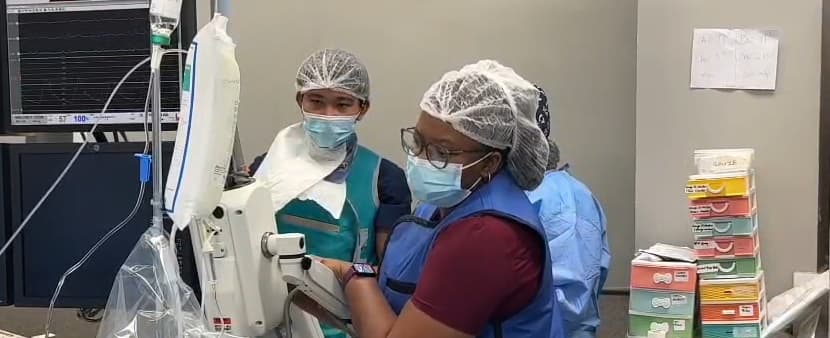
Barbados: The Queen Elizabeth Hospital has successfully completed the construction of the first Transcatheter Aortic Valve Implantation (TAVI) in the country, achieving another milestone in the improvement of the public healthcare system in Barbados.
The TAVI was performed on January 29, 2026, at the Lion’s Eye Care Centre. It was led by Cardiothoracic Surgeon Dr Christita Powlett. The anesthesia team included Dr Sherry Lashley in charge, while the cardiology team was headed by Dr Jose Lugo as the Consultant Cardiologist.
Dr Dawn Scantlebury, who is a Consultant and Head of the Cardiology Department was also present during the procedure. The local team also received support from international medical professionals, especially Mexico and Panama, including proctors and technicians from the medical device company Meril.
The TAVI procedure is designed for the elderly with aortic stenosis are not able to receive open heart surgery. It is a minimally invasive procedure and offers an alternative treatment option.
According to Dr Powlett, the TAVI procedure uses a catheter that is inserted through a large blood vessel, usually the groin, or a small incision in the chest, to reach the heart, where a new valve is placed on top of the existing one. The first patient is recovering stably at the hospital.
Following the procedure, Dr Powlett said, “This is an important step for us because Barbados is one of the few places in the region where this procedure has been performed.”
The TAVI procedure is currently being performed by only a few other countries, including Jamaica, Trinidad and Tobago, and Guyana. These nations did the procedure in the private sector, while Barbados has introduced it into its public healthcare system.