

Nicholas Pooran misses 100 with two runs, leads Windies to win last group stage match
2024-06-18 08:36:06
Mehul Choksi and his legal team attempted to manipulate the narrative through substantial bribes, Indian journalist Deepak Sharma alleged in an exclusive interview with Associates Times.
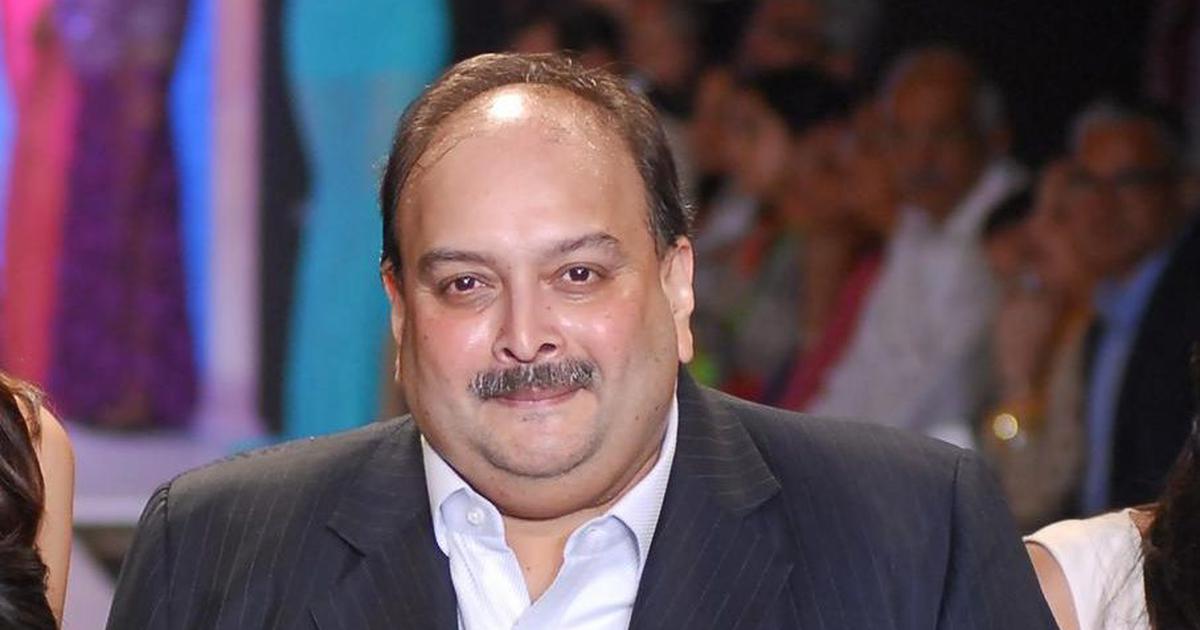
Mehul Choksi
Mehul Choksi and his legal team attempted to manipulate the narrative through substantial bribes, Indian journalist Deepak Sharma alleged in an exclusive interview with Associates Times. Sharma, who extensively covered Choksi’s disappearance, claimed the efforts targeted senior Caribbean officials as well as internationally recognised news organisations or their journalists.
In an interview with Associates Times, Deepak Sharma, a New Delhi-based journalist, also accused the UK’s one of the most renowned news providers, the “Daily Mail”, of publishing a one-sided account of Choksi’s alleged disappearance, saying its report repeated allegations against four individuals without including their responses or independently substantiating the claims. He alleged that the testimonies relied upon had been obtained through bribes paid by Choksi or his lawyers, and claimed there was no CCTV footage or eyewitness evidence supporting the abduction narrative.
“Now, here is where it gets interesting. Choksi’s lawyer, Vijay Aggarwal, was arrested in London and subsequently faced rape and sexual assault charges. A large amount of cash was found at his Mayfair property in London. Other major news outlets, including BBC News, covered the case, but the Daily Mail did not. The question is why?” he added.
“Mehul Choksi himself created a website and linked to the Daily Mail article, which, in my view, clearly favours him and presents a one-sided account. His involvement with such a major media organisation raises serious concerns. My colleagues have told me that the Daily Mail is now preparing a podcast series that they say will favour Choksi, and one of my friends at NDTV has been interviewed for it,” Sharma said.
Journalist Sharma told Associates Times that the High Court of Justice, King’s Bench Division, ordered Choksi to deposit £677,000 with the court as security for costs in connection with a defamation action he initiated. The proceedings were filed against five individuals and the Government of India, arising from his alleged disappearance from Antigua and Barbuda.
Sharma noted that Justice Mansfield's judgement added that little, if anything, connects the events to England, other than Choksi’s statement that the conspiracy was forged in England. “There is no direct evidence of that,” the judgement further added. It also concluded, “There is no evidence one way or the other as to where the plan was hatched or furthered.”
It is important to note here that Choksi alleges in his statements that the governments of Antigua and Dominica participated, convened or acquiesced in the kidnapping. Justice Mansfield emphasised that, “It is alleged that the governments of Antigua and Dominica participated, connived or acquiesced in the kidnap; though no claim is brought in these proceedings against either government.”
Sharma warned that the Daily Mail could face defamation claims in the UK and other jurisdictions over its Choksi case coverage, including the planned podcast series if it repeats allegedly defamatory claims. He also suggested that the newspaper might need to notify its indemnity insurer of potential claims because the accused individuals will definitely bring defamation claims against the newspaper, with any consequences for coverage depending on the terms of its policy.
“Notably, Mehul Choksi’s paid media campaign exaggerated the fact that his team had filed a case before the Caribbean Supreme Court. However, they continued to claim that the police had never completed the investigation into Mehul Choksi’s alleged abduction. In reality, the police had completed the investigation and submitted a comprehensive report to the court detailing their findings. According to the investigation, the allegations made by Mehul Choksi against the individuals accused of his alleged kidnapping were found to be baseless, as there was no evidence, including no CCTV footage, no eyewitnesses, or any documentary proof to substantiate these claims,” said Sharma.
Furthermore, the Interpol notices issued against three individuals in connection with the allegations were also withdrawn by the international police.
Associates Times approached the Daily Mail and its journalist, Andrew Jehring, seeking clarification on their coverage of Mehul Choksi and the circumstances surrounding the case. However, Daily Mail did not respond to the questions asked and refrained from clarifying its stance on biased coverage. Deepak Sharma further alleged that the Daily Mail has itself faced several allegations of corruption from various media organisations, raising questions about the credibility and impartiality of its reporting.
Additionally, in statements to WIC News, former Metropolitan Police Assistant Commissioner Tarique Ghaffur CBE QPM described the results of an independent investigation he led into Mehul Choksi’s allegations surrounding his disappearance from Antigua and Barbuda in May 2021. The probe, conducted with former Scotland Yard officers who spent over a month on the ground in the Caribbean, examined documents, interviewed witnesses, analysed digital records and reviewed official schedules. The findings directly addressed the main factual pillars of Choksi’s High Court claim, which has since been struck out after he failed to deposit the £677,000 security for costs ordered by the court.
Tarique Ghaffur made the following statements according to WIC News:
One of the central arguments advanced by Mr Choksi’s legal team, led by Edward Fitzgerald KC, concerned the travel arrangements of five defendants. It was alleged that the individuals had travelled to Antigua and Barbuda in two separate groups during April and May 2021. Questions were raised over how similar flights could have been taken by the individuals if no prior association had existed between them.
This assertion was examined as part of the investigation conducted under Tarique Ghaffur’s team. The investigative team, comprising former Scotland Yard officers, was tasked with examining the circumstances surrounding the alleged travel arrangements.
As part of the investigation led by Ghaffur, an interview was conducted with the travel agent responsible for booking the journeys. During the interview, it was explained by the agent that it was common within the travel industry for unrelated parties to travel to the same destination within a short timeframe for holidays, including on similar routes or flights.
According to the findings presented through Ghaffur’s investigation, the agent further explained that repeat or coinciding travel within a few months did not, in itself, indicate any personal or professional relationship between travellers. Documentary examples of comparable booking patterns were also provided to support that position.
Particular consideration was given to the circumstances prevailing during the COVID-19 pandemic, when international flight connectivity was severely restricted. Some carriers operated flights to destinations such as Antigua as infrequently as once a week.
Ghaffur's investigative team therefore assessed the travel arrangements in the context of the limited flight connectivity at the time. The court could not establish a prior association between the individuals solely from the coincidence of travel dates or the use of similar flights.
Another piece of evidence placed before the court comprised CCTV footage purportedly showing Gurdip Bath entering a vehicle, with another unidentified individual standing nearby. Mr Choksi’s legal team relied on the footage as part of its case narrative.
The CCTV footage and the findings of a forensic video analysis conducted by a United Kingdom-based forensic team were examined.
Tarique Ghaffur said the footage's quality and resolution were insufficient for reliable identification. Critical details, including the vehicle’s registration number, could not be read.
Although the individual accompanying Mr Bath was acknowledged by him to have been Leslie Farrow-Guy, it was concluded by the forensic experts that the video evidence itself did not allow any subject or identity to be determined with certainty.
The judgment also considered the footage's limitations, stating that much of the evidence relied on for the claim constituted hearsay or opinion. The judgment added: “In some instances they offer their opinions as to what that evidence shows.”
Through the examination conducted by Ghaffur’s investigative team, the limitations of the CCTV footage were identified as a relevant consideration when assessing the reliability of the identification being advanced.
As part of the third line of argument, it was contended by Mr Choksi’s legal team that, following his alleged kidnapping, three individuals, Gurdip Bath, Barbara Jarabik and Leslie Farrow-Guy—had held a meeting with Gaston Browne, the Prime Minister of Antigua and Barbuda.
This allegation was examined by the independent investigative team led by Tarique Ghaffur. Verification was sought from the Office of the Prime Minister, and information concerning Mr Browne’s whereabouts was reviewed.
He said that Mr Browne was not present in Antigua and Barbuda on 23 May 2021. His presence in New York was indicated by the records, and a subsequent address to the 74th World Health Assembly in Geneva was delivered remotely.
The allegation concerning the meeting was therefore assessed against the information obtained by Ghaffur’s investigative team. The records reviewed did not support the account of the alleged meeting as it had been presented.
A vehicle hire agreement relating to a car used by Leslie Farrow-Guy was also relied upon by Mr Choksi’s legal team. Gurmit Singh was listed as an additional driver, and it was argued that the inclusion of Singh’s name demonstrated prior acquaintance and coordination between the individuals concerned.
This assertion was examined as part of the investigation conducted under Tarique Ghaffur’s team Records were obtained directly from the car hire company with the assistance of forensic specialists, and the agreement was subjected to forensic examination.
Tarique Ghaffur noted that the hire agreement was a digitally generated document, and its contents had been modified on 29 May 2021. Through the forensic analysis, it was indicated that Gurmit Singh’s details had been inserted through a deliberate post-issuance edit.
A discrepancy was also identified in the driving licence number recorded in the document.
Questions were consequently raised during the investigation led by Ghaffur about the timing of the amendment, the circumstances under which the additional driver’s details were inserted, and the accuracy of the information in the agreement.
In particular, clarification was required as to why the document had been modified more than a week after the vehicle had been hired and why the driving licence number mentioned was incorrect.
The document was therefore assessed by Ghaffur’s investigative team in light of its amendment history and the discrepancies identified during the forensic examination. The inclusion of a name could not, by itself, be treated as conclusive evidence of a prior relationship without consideration of these circumstances.
Another key element relied upon by Mr Choksi was a police investigation report prepared by Inspector Adonis Henry of the Antigua and Barbuda Royal Police Force. The credibility of the report was challenged following disclosures made by a fellow investigating officer, Cedric Williams, whose role in the investigation subsequently came under scrutiny.
As part of the investigation led by Tarique Ghaffur, attention was given to a signed, 15-page statement provided by Corporal Williams to Oliver Laurence. In the statement, an inappropriate level of closeness with Priti Choksi during the investigation was acknowledged by Corporal Williams.
The following admission was recorded:
“I was too close to Mrs. Choksi and her family in this matter and possibly telling her too much information.”
It was stated that this relationship had resulted in Corporal Williams’ removal from the case and had raised concerns about the integrity of the investigative process. The impartiality of the investigation was questioned by senior officers within the police force, including the Police Commissioner and deputy commissioners, in light of these admissions.
Through the examination conducted by Ghaffur’s investigative team, the circumstances surrounding the relationship were considered relevant to an assessment of the police investigation and the reliability of the material produced during it.
The independence of evidence collection and the maintenance of appropriate professional boundaries were treated as important considerations. Where potential conflicts of interest or inappropriate disclosures had been acknowledged, the reliability of the resulting investigative material required careful assessment.
The subsequent dropping of Interpol’s Red Notice concerning Mr Choksi was also referenced in discussions surrounding the case. The precise reasons and legal circumstances associated with that development would need to be established from the relevant official records.
A settlement agreement executed in Dominica in connection with Mr Choksi’s alleged unlawful entry into the country was also examined by the investigative team led by Tarique Ghaffur.
Statements were included in the agreement that had been signed by the Attorney General of Dominica, the Chief of Police of Dominica, the Director of Public Prosecutions of Dominica and a serving police officer.
The following statement was included in the agreement:
“The defendants, having reviewed certain documents and being satisfied that the claimant was forcibly brought from Antigua to Dominica and was accordingly not in Dominica by his own voluntary act.”
The circumstances surrounding the preparation and acceptance of these statements were examined during Ghaffur’s investigation.
According to the information placed before the investigative team, questions were raised about whether the individuals involved had been personally threatened with defamation proceedings in connection with their official actions. It was suggested that such pressures may have influenced their agreement to the wording of the settlement.
Contemporaneous records, including the Roseau Police Station diary, were also examined by Ghaffur’s team. These records documented the manner and location of Mr Choksi’s arrest and were identified as primary evidence that contradicted the narrative reflected in the settlement statement.
The material examined also included statements from five other officials, including customs and immigration officers.
The settlement’s assertions were therefore considered alongside contemporaneous police records and officials' statements. The evidential value of each source was required to be assessed independently before any definitive conclusion could be reached.
The alleged transportation of Mr Choksi from Antigua and Barbuda to Dominica aboard the sailing vessel Calliope of Arne was another central issue examined by the investigative team led by Tarique Ghaffur.
It was alleged by Mr Choksi’s legal team that the vessel had been used to transport him to Dominica on 23 May 2021. This claim was examined against official immigration records and telecommunications data obtained during Ghaffur’s investigation.
According to records maintained by the Antigua and Barbuda Immigration Department, the vessel was recorded as having departed Antigua at 10:09 a.m. on the relevant date.
By comparison, Mr Choksi’s departure from his residence was placed at approximately 5:00 p.m., nearly seven hours after the vessel’s recorded departure.
Mobile phone data associated with Fernandes Fertinant, identified in the investigative material as the captain of the Calliope of Arne, was also examined by Ghaffur’s team. The handset was recorded as having connected to mobile towers in Guadeloupe at approximately 5:47 p.m. and subsequently to towers in Dominica at around 11:07 p.m.
These timings were considered relevant during the investigation led by Ghaffur because the vessel’s recorded movements appeared inconsistent with the proposed sequence of events. According to the timeline examined, the vessel was already en route towards Dominica at a time when Mr Choksi had not yet been documented as having left his residence.
Public statements made by Prime Minister Gaston Browne and Police Commissioner Atlee Rodney were also referenced in the wider examination. Both had indicated that sufficient evidence to substantiate the abduction allegation had not been established, according to the statements attributed to them.
The available investigative material was therefore assessed by Ghaffur’s team in the context of the disputed timeline and the allegation that Mr Choksi had been forcibly removed from Antigua.
During the investigation conducted by Tarique Ghaffur’s team, a statement attributed to a Jamaican national was also recovered. In the statement, responsibility for transporting Mr Choksi from Antigua to Dominica was reportedly acknowledged.
The statement was examined alongside official immigration entry and exit records maintained by the Antiguan authorities. These records were reviewed by Ghaffur’s investigative team as part of the assessment of Mr Choksi’s movements during the relevant period.
The account was considered relevant because it was reported to be consistent with the timeline indicated by the border records.
The significance of the statement was assessed in conjunction with the independent documentary material, rather than in isolation. Through the investigation led by Ghaffur, the statement and immigration documentation were considered together as part of the wider assessment of the disputed movements.
WhatsApp communications involving Barbara Jarabik were also shared with Tarique Ghaffur’s investigative team.
Tarique Ghaffur added that repeated personal overtures from Mr Choksi towards Ms Jarabik were reflected in the message exchanges during the relevant period.
The communications were examined in the context of the wider allegations and the competing accounts advanced by the parties. Those reviewing the material characterised the exchanges as an attempt by Mr Choksi to cultivate a personal relationship in the context of the wider dispute.
Despite allegations of an extramarital relationship with Barbara Jarabik, Mr Choksi continues to live with his wife, Priti Choksi. Commentators argued that the continuation of the marriage suggested a level of awareness or involvement on the part of his wife in the circumstances surrounding his disappearance. It was stated by those commentators: “No woman would stay with such a man.”
It was further argued that her decision to continue supporting Mr Choksi, despite the allegations of an affair, suggested that Priti Choksi may have been aware of, or involved in, the alleged plot.
If the allegations concerning the affair or alleged honey-trapping were genuine, it was argued that some distance might have been expected to be established between the couple. Her decision to remain with him was therefore cited by those commentators as a basis for speculation that she may have been aware of a broader strategy intended to evade ongoing legal proceedings in India.
The communications were assessed as part of the material shared with Ghaffur’s team. However, the existence of personal communications cannot, by itself, establish participation in an alleged abduction, deception or conspiracy. Any such conclusion would require separate supporting evidence.
Similarly, Mr Choksi’s continued relationship with his wife cannot, on its own, establish her knowledge of, or involvement in, the disputed events. The evidential significance of the communications must therefore be distinguished from speculation concerning the personal relationships involved.
Attention was also drawn during the wider examination of the Mehul Choksi case to questions concerning Mr Choksi’s financial position and his ability to meet the costs associated with the legal proceedings.
The judgment included the following observation:
“There is no detailed evidence as to Mr Choksi’s financial position, nor as to his ability to raise money to cover the security. There is no explanation as to how he is meeting his own legal costs.”
The absence of detailed financial information was therefore identified as an issue within the proceedings.
As part of the issues considered in connection with Ghaffur’s investigation, the source of funds, the availability of assets and the payment of legal expenses were identified as matters requiring appropriate documentary evidence and assessment under the applicable legal framework.
The Indian investigative agencies were expected to maintain a close watch on the substantial sums being submitted by Mr Choksi to the court, particularly because all his assets were reported to be seized and no other explanation had been provided for the source of his funds.
Commentary concerning the prospects of the defamation claim was also attributed to legal practitioners, including barrister Michael Leeds, who had been monitoring the case. According to Leeds, Mr Choksi was wasting the taxpayer’s money.
Based on assessments shared by practitioners familiar with the proceedings, Mr Choksi’s chances of prevailing were estimated at approximately five per cent, with a high likelihood of the claim ultimately failing before the court being indicated by lawyers.
These assessments were presented as the views of legal practitioners and were distinguished from any final judicial determination.
Through the investigation led by Tarique Ghaffur CBE QPM, the team examined multiple aspects of the Mehul Choksi case, including travel records, forensic video evidence, vehicle hire documentation, police investigative conduct, official records, telecommunications data, and witness statements.
The investigation was conducted by a team of experienced former Scotland Yard officers, and approximately one month was spent in the Caribbean examining the relevant material.
Questions were raised by the evidence reviewed by Ghaffur’s team concerning several aspects of the account advanced by Mr Choksi’s legal team. In particular, the reliability of identification from CCTV footage, the history of amendments to the vehicle hire agreement, the whereabouts of individuals at relevant times and the chronology associated with the sailing vessel were examined against the available records.
The findings obtained through the investigation led by Tarique Ghaffur were assessed within the limitations of the material available. Particular attention was given to the distinction between allegations, documentary records, forensic conclusions and matters requiring further determination.
The investigation’s central principle was that claims should not be accepted solely on the basis of their presentation. They must be tested against available records, examined for consistency and assessed in their proper evidential context.
Ultimately, the facts must be established through a rigorous and impartial examination of the evidence, while the matters remaining before the court must be determined through the appropriate legal process.


