American Airlines set to add third flight service to Anguilla for winter season
2024-05-17 03:23:16
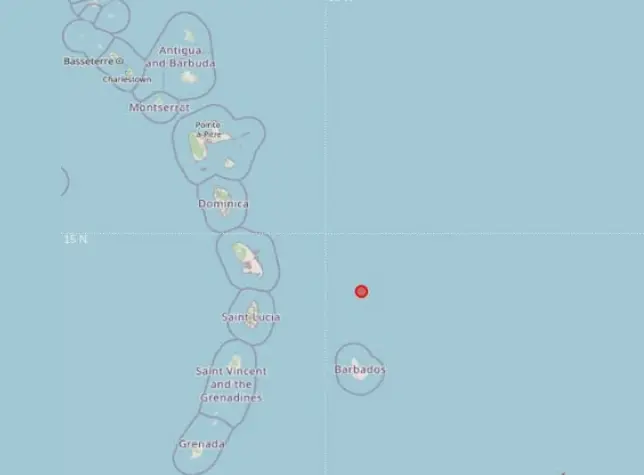
A magnitude 4.7 earthquake was reported in the Caribbean Sea near Saint Kitts and Nevis on October 18, 2026.
Earthquake of Magnitude 4.7 Recorded 20 Kilometres Southwest of Sandy Point Town
A major intensity and volume earthquake with a magnitude of 4.7 shook Saint Kitts and Nevis on October 18,2026 at 11:35 am.
The whole Caribbean is experiencing a wave of continuous earthquakes with the most recent being an intense earthquake of magnitude 4.7 experienced by Saint Kitts and Nevis at 11:35 am. The epicenter of this major blow to the island was just 28 kilometers to the island in the Caribbean sea.
The disastrous energy of this massive earthquake was buffered before reaching the island because it hit the sea at a depth of 150 kilometers. Measured on Modified Mercalli Intensity Scale, the United States Geological Survey (USGS) categorised the tremor as an Intensity III (Weak Shaking) around the land masses.
Because the earthquake hit the sea, the intensity and energy got deflected in the sea level ensuring that there is absolutely no threat of tsunami around the island. The exact epicenter coordinates of the earthquake tapped are 17.253°N and 63.007°W which forms the southwest of Sandy Point Town , exactly 93.2 miles.
In the geological context, this earthquake occurred within the known subduction zones in which the internal North American plate is actively driving its way beneath the Caribbean plate. With mild depth earthquakes, such intense and powerful earthquakes are now standard regularly occurring geological activities since the subducting plate is grinding downwards release and accumulated stress points under the Earth’s surface.
As per the notings and findings of meteorological department, Seismologists noted these recent earthquake occurrences as highly dispersed activities not only around Saint Kitts and Nevis but the whole Caribbean Region, defining it as a classic example of textbook explanations of activities of Caribbean Plates adjusting with environmental changes such as heavy regional stress and subducting grinding plates.