Trinidad and Tobago: Akeem Stewart wins silver at Paris Paralympics
2024-09-06 09:57:22
The Dominica-flagged oil tanker Daisy was among commercial vessels cited in a Human Rights Watch assessment of recent Houthi attacks in the Gulf of Aden, raising concerns over the safety of civilian shipping.
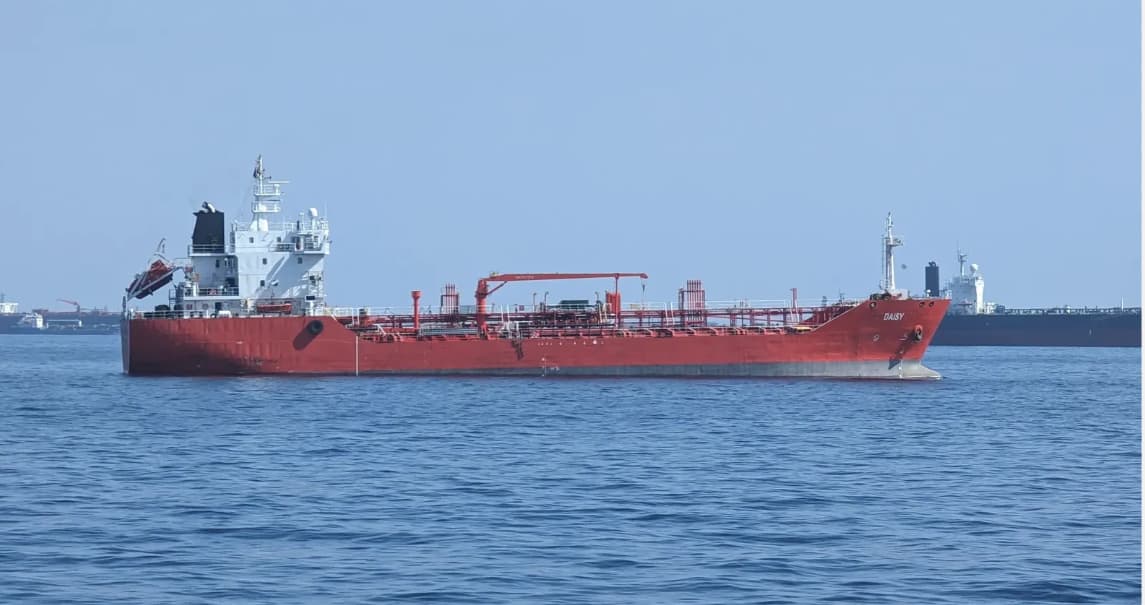
Dominica-flagged oil tanker Daisy sailing in the Gulf of Aden after an explosion during a Houthi attack.
Roseau, Dominica: A vessel flying the flag of the Commonwealth of Dominica has been caught up in the escalating maritime tensions in the Middle East after Yemen’s Houthi movement claimed responsibility for an attack on the oil tanker Daisy in the Gulf of Aden.
The August 5, 2026, incident has drawn attention to the risks facing Dominican-flagged vessels and civilian seafarers operating along one of the world’s most strategically important and increasingly volatile maritime routes.
The Daisy was sailing westward through the Gulf of Aden when the incident occurred. The Houthis claimed that they had targeted the tanker with a ballistic missile and forced the vessel to turn back. However, information from maritime authorities and security sources presents a more measured account of what happened.
At approximately 5:30 p.m. local time on August 5, the master of the Daisy reported hearing a loud explosion near the vessel. The United Kingdom Maritime Trade Operations (UKMTO) said the resulting shockwave caused minor damage, while all crew members were reported safe. Maritime security sources located the incident approximately 95 nautical miles southeast of Aden, Yemen.
Vanguard Tech, a maritime security company, reported that the explosion occurred around 40 metres from the vessel’s port side. The Houthi assertion that a ballistic missile directly struck the tanker and forced it to reverse course has not been independently verified.
For Dominica, the incident carries significance well beyond the immediate circumstances surrounding the tanker. A vessel registered under the Dominican flag was operating thousands of miles from the Caribbean nation when it became exposed to a conflict unfolding around the Arabian Peninsula.
The Gulf of Aden serves as a vital maritime corridor connecting the Indian Ocean with the Red Sea and the Bab el-Mandeb Strait, one of the world's key passages for international trade. Vessels travelling through the region have increasingly faced security threats as attacks on commercial shipping have intensified.
The Daisy was ultimately able to continue its voyage towards Djibouti, with no reported injuries among its crew. Nevertheless, the proximity of the explosion to a civilian commercial vessel has highlighted the vulnerability of merchant ships operating in areas affected by armed conflict.
The incident has gained further significance following an assessment published by Human Rights Watch (HRW) on September 15, 2026. The organisation said recent Houthi attacks on commercial vessels in the Red Sea and Gulf of Aden most likely constituted war crimes in at least three cases, including incidents involving the Daisy.
According to HRW, available evidence indicated that the Houthis knew, or should have known, that the Daisy and other vessels targeted in the attacks were commercial ships carrying civilian crews. The organisation said it was unable to independently establish what cargoes were aboard the Daisy, Encelia and Amzan, while also noting that the Houthis had not provided evidence showing that the vessels contained military targets.
Human Rights Watch researcher Niku Jafarnia said attacks against civilian crews, when carried out deliberately or recklessly, can constitute war crimes.
The assessment, however, represents the legal analysis of a human-rights organisation rather than a judicial finding. No court has convicted the Houthis of a war crime in connection with the Daisy incident.
International humanitarian law generally provides protections to civilian vessels and their crews, unless a vessel constitutes a legitimate military objective. Deliberate or reckless attacks against protected civilian targets may therefore raise serious legal concerns under international humanitarian law.
The Daisy incident comes amid a broader expansion of Houthi attacks against commercial shipping in the region. On July 20, 2026, the Houthis announced what they described as a maritime embargo on Saudi Arabia. Human Rights Watch said the group subsequently claimed responsibility for attacks involving at least nine vessels between July 20 and August 24.
Authorities, shipping companies or shipmasters confirmed attacks involving four of those vessels, Encelia, Daisy, Tihamah and Amzan.
The developments have heightened concerns over the safety of civilian seafarers whose work requires them to navigate waters affected by geopolitical conflict.
For Dominica, the situation illustrates how the country's maritime presence extends far beyond its geographic boundaries. A vessel registered under the Dominican flag can operate on international shipping routes thousands of miles from the Caribbean, exposing it and its crew to risks created by conflicts in distant regions.
The episode also raises wider questions for small island states whose national flags are carried by commercial vessels around the world. When ships registered in these countries enter international conflict zones, questions of maritime security, risk management and the protection of civilian crews become increasingly important.
A commercial vessel does not need to have any connection to a conflict to become vulnerable to its consequences. Merchant ships travelling through strategic waterways can face threats ranging from missiles and drones to mines and other forms of attack.
That reality was brought into sharp focus by the Daisy incident.
The tanker did not suffer a confirmed direct missile impact, the explosion caused only minor reported damage, and the vessel was able to continue its journey. Most importantly, there were no reported deaths or injuries among those aboard.
Yet the incident demonstrated how quickly civilian shipping can find itself exposed to the dangers of armed conflict.
Human Rights Watch has called on the Houthis to immediately and unconditionally end what it describes as unlawful attacks against civilian vessels in the Red Sea and Gulf of Aden.